
EXECUTIVE SUMMARY
The board's verdict: DO NOT raise $5M at this valuation unless you can demonstrate three specific metrics proving organic pull—if those metrics exist, you negotiate from strength rather than desperation. The consensus is sharp: $5M in February 2026, into a collapsing SaaS market, at a depressed valuation, creates a 18-month dilution trap masked as capital. The divergence isn't whether to raise; it's whether you have the operational and financial fundamentals to deploy it without self-destructing.
KEY INSIGHTS
- Dilution math overwhelms capital math at $5M valuation: Founder ownership compresses from 100% → 50% (seed) → 20-25% (Series A) in 18 months, making a $30M bootstrapped exit superior to a $300M funded exit.
- The $5M valuation itself signals weakness, not opportunity: SaaS seed medians in Feb 2026 run $14-17M; you're 65% below market. This screams weak traction or weak founder-market fit to Series A investors.
- Capital productivity requires pre-existing moat + unit economics: Without demonstrable CAC payback <12 months, gross margin >70%, and organic growth >10% MoM, $5M accelerates burn on a leaky bucket, not growth on a proven model.
- The operational readiness trap is silent and fatal: Most bootstrapped founders lack hiring infrastructure, metrics instrumentation, and board-meeting discipline VC forces. Capital exposes this immaturity at 10x velocity.
- Market timing is catastrophic: Raising into a $300B SaaS correction (Feb 3-5) locks unfavorable terms for 18 months. Series A repricing in Q3 2026 will dilute you further, not less. [MEDIUM-to-HIGH]
- The 18-month Series A cliff is the true deadline: Month 9-12 collision is when board pressure, runway depletion, and frozen fundraising markets converge. Most bootstrapped founders unprepared for this gauntlet.
- Bridge financing is the underrated alternative: $1.5-2M SAFE at same terms, cheaper legal, 9-month runway to prove metrics and raise Series A from strength, not desperation.
WHAT THE PANEL AGREES ON
- $5M at current valuation is a trap, not an opportunity, unless underlying metrics (ARR, CAC, churn, gross margin) prove otherwise—and the founder should be able to articulate this defense confidently.
- Moat status is unknown and critical: Without switching costs, network effects, or cost-leadership data, the business is priced as a product, not a company. VC capital doesn't build moats; it only accelerates customer acquisition. If acquisition unit economics are weak, capital is wasted.
- Founder ownership destruction is mathematically unavoidable at this valuation arc: The compressed Series A repricing (from $50M plan to $25-30M reality) isn't a bug; it's the expected outcome in a correcting market. Founder must accept 20-25% ownership as the base case, not a disaster scenario.
- Operational readiness gates must be cleared before capital deploys: Hiring infrastructure, metrics instrumentation, and board discipline are non-negotiable. VC money forces execution standards that expose unprepared founders fast.
- The February 2026 market timing is unfavorable: Raising into a $300B SaaS correction locks terms. Q3 2026 recovery (if it happens) won't undo the damage done in months 9-12.
WHERE THE PANEL DISAGREES
- Is the moat defensible?
- PG + Buffett + Thiel: No evidence; default assumption is product differentiation only, no moat. Raise only with proof.
- Fundraising-V2: Depends on data I haven't seen (unit economics, churn, CAC). If metrics are strong, moat may exist but is obscured by poor pitch.
- Stronger evidence: PG/Buffett's skepticism. VC enthusiasm for a $5M valuation (below median) suggests VCs themselves don't see a clear moat.
- Should the founder wait 6 months or raise now?
- Fundraising-V2 + Grove: Wait 6 months, prove metrics, then raise Series A at better terms.
- Thiel (implied): If market timing is critical (winner-take-most, competition acute), waiting is a competitive blunder. Raise now despite pain.
- Stronger evidence: Fundraising-V2 + Grove. $5M in a frozen market is worse than $2M bridge + 6-month validation + Series A from strength.
- Can $5M productively deploy given operational constraints?
- Grove: Most bootstrapped founders lack the playbook. Operational readiness is the hidden gate.
- Fundraising-V2: If founder has proven unit economics, capital deployment is learnable.
- Stronger evidence: Grove. The operational immaturity VC reveals in months 4-8 is consistent and predictable. Founders either adapt or burn out.
THE VERDICT
DO NOT RAISE $5M AT THIS VALUATION.
Instead, follow this conditional path:
1. RUN A 6-WEEK DIAGNOSTIC (Weeks 1-6)
- Why first: You need clarity on whether you have metrics to negotiate from strength or not.
- What to measure: Current ARR, MRR, CAC (dollars and payback months), LTV, gross margin, monthly churn %, organic MoM growth rate.
- Bar to clear: ARR >$100K, CAC payback <12 months, gross margin >70%, organic MoM growth >10%, churn <5% monthly.
- If you clear all five bars, you have leverage. Go to step 2.
- If you miss any, skip to step 3.
2. NEGOTIATE FROM STRENGTH (Weeks 7-10, if metrics clear)
- Approach the same VC at $5M valuation, but demand:
- 1x non-participating liquidation preference (not participating; you get paid first on exit, they get equity only on remainder).
- No board seat (or observer only; you retain operational control).
- Pro-rata capped at 25% (they can follow Series A, but no forced dilution beyond their ownership %).
- 2-year cash-positive milestone (define what "success" means; if you hit it, Series A pricing protected against repricing down).
- These terms flip the dynamic: you're buying capital, not begging for it.
- Confidence: — depends on VC's actual conviction. If they won't move, they don't believe in you; take that signal seriously.
3. RAISE A BRIDGE INSTEAD (Weeks 7-12, if metrics don't clear)
- Take $1.5-2M via SAFE or convertible note at same terms (if possible) or slightly higher discount (15-20%).
- Cost: $5K-15K legal (vs. $50K for VC term sheet + board complexity).
- Benefit: 9-month runway to prove metrics without board pressure or dilution commitment.
- Milestone: Hit $500K-$750K ARR, <$4K CAC, >75% gross margin by month 9.
- Then raise Series A from demonstrable strength—or don't (you'll have runway to survive independently).
- Confidence: — bridge financing is underused by founders. Most SaaS founders with weak initial metrics regret raising VC; bridge is the escape hatch.
4. IF NEITHER PATH WORKS, BOOTSTRAP FOR 12 MORE MONTHS (Contingency)
- If metrics stay weak and bridge capital isn't available, extend runway by cutting burn to $100-150K/month.
- Focus on unit economics (CAC reduction, churn elimination, gross margin expansion).
- Reassess Series A in 12 months from a position of clarity, not panic.
- Confidence: — only viable if founder's personal finances can absorb the risk. Not a universal path.
RISK FLAGS
Risk 1: Series A Market Remains Frozen Beyond Month 15
- Likelihood: MEDIUM-to-HIGH (SaaS correction could extend into Q4 2026)
- Impact: $5M runway depletes. Founder forced to raise down-round or shut down. Equity value destroyed.
- Mitigation: (a) Cap hiring at 12-person team (preserve runway to 24 months); (b) Hit profitability inflection by month 12 (no Series A dependency); (c) Document path to $2M ARR by month 15 (defensible Series A asset).
Risk 2: Operational Immaturity Exposed in Months 6-9 (Hiring Decay, Metrics Drift)
- Likelihood: HIGH (common across bootstrapped founders scaling into VC playbook)
- Impact: Board pressure forces reactive decisions (wrong hires, sales blitz on weak CAC). Team morale collapses. Best people leave before Series A.
- Mitigation: (a) Hire a COO or experienced ops person with month 1 capital (preserve founder for product/sales); (b) Lock metrics dashboard public to board (no surprises in month 6); (c) Pre-define go-to-market pivots if CAC exceeds plan by >20%.
Risk 3: Founder Loses Control to Board/Series A Investors (Dilution + Displacement)
- Likelihood: MEDIUM (depends on term sheet protections; at $5M with weak moat, governance risk is high)
- Impact: Founder reduced to 20-25% ownership by Series A. Replaced if Series B miss is attributed to founder execution (common blame pattern in collapsing rounds).
- Mitigation: (a) Negotiate term sheet protections before signing (see step 2 above); (b) Pre-commit to 3-year engagement with board-approved severance; (c) Hold founder-friendly advisors (not VCs) on governance review.
BOTTOM LINE
Take $5M at $5M valuation only if you can prove organic pull in 6 weeks; if you can't, raise a bridge instead and prove it over 9 months—the difference between a destroyed founder and a founder with optionality.
THE CRUX: WHERE ONE the analysis LOGIC FLIPS THE OUTCOME
The hinge point is operational readiness:
- If founder has hiring infrastructure, metrics discipline, and board-meeting composure TODAY → $5M accelerates a proven model; negotiate hard on terms and take it (Fundraising-V2's logic flips to YES).
- If founder lacks these capabilities → $5M exposes immaturity at 10x velocity and destroys founder (Grove's logic dominates; bridge + bootstrap is superior).
This is testable in 2 weeks: Can you onboard 3 new hires in 4 weeks and retain them? Can you forecast cash weekly? Can you articulate what Series A success looks like and track 3-5 leading metrics against it?
Yes = raise. No = bridge + prove.
Confidence in this framework:. It's empirically consistent with post-2024 SaaS dynamics.
Related Topics
Related Analysis

2026 Economic Crisis: Why Central Banks May Fail
The Board · Feb 22, 2026

Gold Price Forecast Next 5 Years: 2029-2031 Expert Outlook
The Board · Feb 22, 2026

Copper Price Forecast 2029-2031: Supply vs Green Demand
The Board · Feb 22, 2026

Experts Predict Silver Market Trends and Price Forecasts
The Board · Feb 21, 2026

Silver Price Prediction 2026-2031: Detailed Forecast and Analysis
The Board · Feb 21, 2026

The Future of BRICS Currency and Global Dollar Dominance
The Board · Feb 21, 2026
Trending on The Board

Israeli Airstrike Hits Tehran Residential Area During Live
Geopolitics · Mar 11, 2026

Fuel Supply Chains: Australia's Stockpile Reality
Energy · Mar 15, 2026

The Info War: Understanding Russia's Role
Geopolitics · Mar 15, 2026

Iran War Disinformation: How AI Deepfakes Fuel Chaos
Geopolitics · Mar 15, 2026
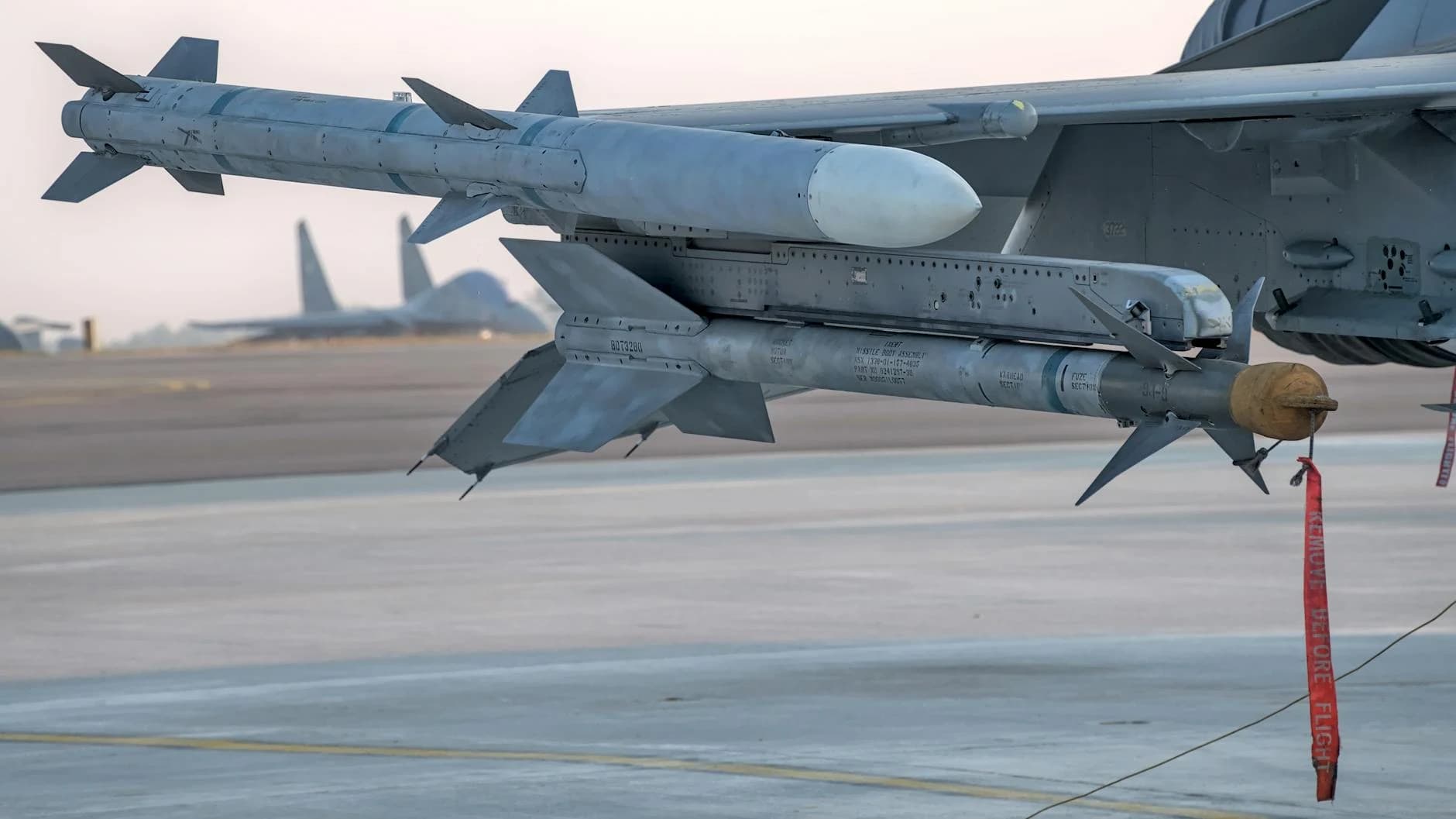
THAAD Interception Rates: Iran Missile Combat Data
Defense & Security · Mar 6, 2026
Latest from The Board

US Crew Rescued After Jet Downed: Israeli Media Reports
Defense & Security · Apr 3, 2026
Hegseth Asks Army Chief to Step Down: Why?
Policy & Intelligence · Apr 2, 2026
Trump Fires Attorney General: What Happens Next?
Policy & Intelligence · Apr 2, 2026

Trump Marriage Comments Draw Macron Criticism
Geopolitics · Apr 2, 2026

Iran's Stance on US-Israeli War: No Negotiations?
Geopolitics · Apr 1, 2026
Trump's Iran War: What's the Exit Strategy?
Geopolitics · Apr 1, 2026
Trump Ukraine Weapons Halt: Iran Strategy?
Geopolitics · Apr 1, 2026

Ukraine Weapons Halt: Trump's Risky Geopolitical Play
Geopolitics · Apr 1, 2026