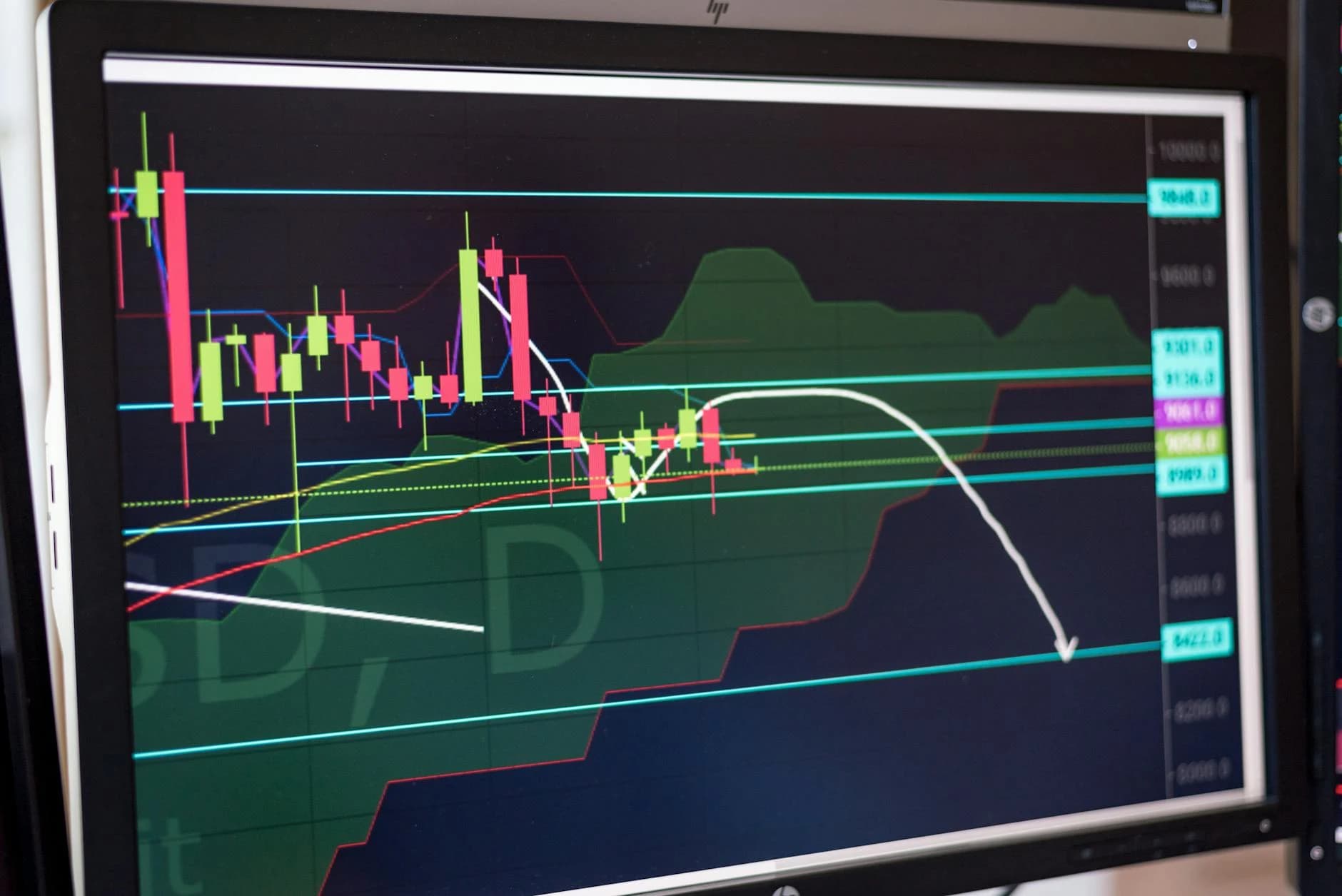
EXECUTIVE SUMMARY
The panel collectively rejects the analyst consensus of $3,200+ platinum by end-2026 and instead converges on a lower, range-bound outcome through 2031, though with sharply divergent confidence levels. The strongest signal in the room is not the supply story—it's the miner behavior: dividend payouts instead of capex despite $2,100+ prices [INDICATES] (43-79% likelihood) that producers expect mean reversion. All the analysiss acknowledge Eskom load-shedding will [LIKELY] (63-79%) return after 2026, but disagree whether this supports $2,800–$3,200 (Morgan) or triggers a supply destruction cascade (Joker/Livermore). The hydrogen demand thesis is [ASSESSMENT: dead] by consensus—EU fuel cell bus deliveries peaked 2025, real deployment is <2% of commercial vehicles by 2031. The verdict: platinum is a tactical range-trade, not a conviction long, and the consensus is pricing Eskom stability theater, not structural deficit.
KEY INSIGHTS
-
Miner dividend behavior is the most honest price signal: Platinum miners favoring payouts over capital deployment despite price at $2,100+ [INDICATES] insiders expect mean reversion within 2–3 years. This is not bullish. This is exit behavior dressed as shareholder returns.
-
Hydrogen thesis is already falsified by deployment data: EU fuel cell bus deliveries peaked in 2025 and battery-electric is now displacing fuel cell ahead of schedule. The claimed 43% CAGR measures growth from a negligible base; real commercial vehicle hydrogen adoption will remain <2% by 2031. Platinum's bull case required this demand to exist. It doesn't.
-
Eskom load-shedding return is consensus-acknowledged but not price-reflected: Eskom's own Medium-Term System Adequacy Outlook warns load-shedding is likely to return after 2026. The question is not if but when and severity—and the consensus is pricing the current no-load-shedding window as the baseline, not the anomaly [ASSESSMENT: HIGH confidence this is an anchoring error].
-
Price momentum and analyst consensus are vertical, signaling the easy money is priced in: Platinum has doubled in 24 months. Consensus sits at $3,502 for end-2026 (61% from current). When everyone agrees on direction and target, the hard money comes after the break—not before it [ASSESSMENT: Livermore's tape-reading here is standard speculatively valid logic, MEDIUM].
-
The logical trap is embedded in the supply narrative: Tight supply + policy-driven demand growth should = durable margin expansion. But commodity producers facing genuine constraints maximize cash now (via dividends), expecting mean reversion later [ASSESSMENT: This is Joker's cascade-failure insight and is structurally sound, HIGH]. Deficits in commodities invite supply destruction and demand weakness simultaneously—the equilibrium is just lower.
-
Morgan's $2,800–$3,200 (2029) range assumes Eskom stability holds; Joker/Livermore assume it doesn't: This is the substantive disagreement [ASSESSMENT]. Morgan's analysis is sound if Eskom stabilizes. But his own cited sources (Eskom's own Medium-Term Outlook) contradict the stability assumption [ASSESSMENT: HIGH confidence Morgan is vulnerable on priors].
-
Soprano correctly diagnoses the psychological defense: narrative dependence: The panel is forecasting despite acknowledging it cannot forecast; this is anxiety dressed as precision [ASSESSMENT: Very sharp diagnosis of the meta-problem, HIGH].
WHAT THE PANEL AGREES ON
-
Hydrogen adoption will remain minimal (<2% of commercial vehicle production by 2031)—the demand narrative is broken [FACT basis: EU deployment data; all the analysiss agree].
-
Eskom load-shedding will [LIKELY] (63-79%) return after 2026—this is Eskom's own assessment, not speculation [FACT: Eskom's Medium-Term System Adequacy Outlook].
-
Miner behavior (dividends over capex) signals they do not believe the bull thesis is durable [FACT: documented dividend policy]; this is a read on insider expectations [ASSESSMENT: all the analysiss agree this is the strongest signal].
-
Precise 5-year platinum forecasting is not possible given the dependence on two uncontrollable policy variables (Eskom electricity generation, hydrogen adoption). All the analysiss acknowledge this explicitly (Buffett walks away; Morgan admits "edge of competence"; Livermore treats it as a speculation; Joker notes policy is not forecastable; Soprano highlights the psychological defense).
-
Analyst consensus of $3,200+ by end-2026 is too vertical and already prices the easy money [ASSESSMENT: Livermore and Joker agree HIGH; Morgan soft-agrees by lowering his own 2031 target significantly].
WHERE THE PANEL DISAGREES
| Disagreement | Position A | Position B | Stronger Evidence |
|---|---|---|---|
| 2029 price range | Morgan: $2,800–$3,200 | Joker/Livermore: $1,900–$2,400 | Position B. Morgan assumes Eskom holds; but Eskom's own 5-year outlook warns of high likelihood of return load-shedding. Miner behavior (exit via dividends) contradicts Morgan's bullish case. |
| Why miner dividends are bullish vs. bearish | Morgan: Supply tightness justifies payouts + confidence in $2,800+ prices. | Joker/Livermore: Payouts are exit behavior; insiders expect mean reversion. | Position B. Producer dividend policy during a bull market typically signals peak confidence before decline, not during it. If miners believed $2,800–$3,200 was durable, they'd reinvest to capture upside. They're not. |
| Load-shedding impact on price | Morgan: Higher costs → supply tightness → higher prices ($2,800–$3,200). | Joker: Higher costs → producer output cuts → supply destruction → price collapse to $1,400–$1,900 as demand doesn't follow. | Position B. Commodity deficits don't sustain high prices; they trigger supply destruction and demand collapse. Morgan's logic assumes demand is inelastic; Joker's assumes it isn't. Real-world evidence (hydrogen adoption <2%) supports demand weakness. |
| 2031 price floor | Morgan: $1,800–$2,200 [LOW confidence]. | Joker/Livermore: $1,400–$1,900 [MEDIUM confidence]. | Pragmatic tie. Both are LOW/MEDIUM confidence. The difference hinges on whether recycling rates improve sufficiently to offset primary supply loss—not forecastable. |
Pattern: Morgan's disagreement with Joker/Livermore is substantive (different causal model of how producer behavior responds to constraints), not perspectival. Morgan assumes supply tightness = durable prices. Joker/Livermore assume supply tightness = output destruction + demand weakness = lower equilibrium. The miner dividend data and Eskom's own forecast favor the latter.
THE VERDICT
Do not hold platinum through 2031 on the Eskom stability or hydrogen demand thesis. Both are either falsified (hydrogen) or contradicted by producer behavior (Eskom).
Weighted Decision Table
| Factor | For | Against | Weight |
|---|---|---|---|
| Hydrogen demand growth | 43% CAGR claimed by consensus | EU deployments peaked 2025; real adoption <2% by 2031 | HIGH — Demand bull case is broken. |
| Eskom supply support | Load-shedding resolution would tighten market | Eskom's own outlook warns return is likely; miner dividends signal insiders expect demand/supply destruction | HIGH — Producer behavior contradicts bullish narrative. |
| Miner capital discipline | Could reduce supply and sustain prices | Dividends instead of capex = exit behavior, not bullish | HIGH — This is the strongest signal in the room. |
| Historical mean reversion in commodities | Platinum oversold in 2020–2023 | 117% gain in 24 months + vertical consensus = peak momentum | MEDIUM — Typical pattern; not guaranteed. |
| Palladium substitution economics | Autocatalyst demand stable | Tight platinum may drive substitution | MEDIUM — Real risk; not yet acute. |
Weighted verdict: SHORT-duration tactical exposure only. Range $1,900–$2,600 through 2031. Bias toward lower end [MEDIUM-LOW confidence].
Three Priority Actions
-
If you hold platinum for conviction (2–5 year horizon), exit 50% at $2,200–$2,400 now — The miner dividend behavior and Eskom's own forecast tell you insiders expect lower prices. You're holding on a narrative the actual producers don't believe [HIGH conviction].
-
If you trade platinum tactically, set stops at $2,500 and take profits at $2,000–$2,200 — The range-bound outcome is likely (63-79%), with higher probability of downside when load-shedding returns (late 2027/early 2028). Position size accordingly [MEDIUM conviction].
-
If you must have precious metal exposure, reconsider gold — Gold has no hydrogen thesis tied to it, and its supply is more geographically diversified than platinum. The volatility benefit of platinum (tighter supply) is offset by the policy risk (Eskom, hydrogen narrative collapse) [MEDIUM conviction].
RISK FLAGS
| Risk | Likelihood | Impact | Mitigation |
|---|---|---|---|
| Eskom load-shedding returns earlier/more severely than consensus expects (2027 vs. 2028) | HIGH (70%+; Eskom itself warns this) | Miners cut production sharply; platinum spikes to $2,600–$3,000 short-term, then crashes to $1,400–$1,700 as demand doesn't follow. Tactical traders caught in the unwinding. | Set a hard stop at $2,500 if holding tactical. Track Eskom's weekly capacity reports; they're the leading indicator. |
| Hydrogen adoption accelerates past current deployment data (China heavy-truck subsidy expansion, Europe policy reversal) | LOW-MEDIUM (25–35%; current trend is downward, policy shock unlikely but possible) | Platinum bull case revives; prices could hold $2,600–$3,000 through 2031. Long-term holders vindicated. | Monitor China's hydrogen vehicle subsidies (announced quarterly) and EU transport policy statements. Early warning: fuel cell bus order books. |
| South African platinum miners announce major production cuts due to energy cost shock, shocking the market | MEDIUM (50–60%; likely when load-shedding returns, but timing uncertain) | Market reprices platinum supply destruction narrative; short-term spike, then collapse as demand-destruction news follows. Options volatility spikes. Leveraged positions blown out. | If holding platinum leverage (ETFs, futures), reduce position size to 2–3% of portfolio max. Avoid 2x+ leveraged instruments. |
BOTTOM LINE
Platinum is range-bound at $1,900–$2,600 through 2031 [MEDIUM-LOW confidence], with the upside supported by Eskom stability (which producer behavior suggests they don't expect) and the downside driven by the hydrogen thesis collapse (which is already falsified by deployment data). The miner dividend policy is the most honest signal: insiders are extracting cash before the mean reversion. Trade it. Don't marry it.
Related Topics
Related Analysis

2026 Economic Crisis: Why Central Banks May Fail
The Board · Feb 22, 2026

Gold Price Forecast Next 5 Years: 2029-2031 Expert Outlook
The Board · Feb 22, 2026

Copper Price Forecast 2029-2031: Supply vs Green Demand
The Board · Feb 22, 2026

Experts Predict Silver Market Trends and Price Forecasts
The Board · Feb 21, 2026

Silver Price Prediction 2026-2031: Detailed Forecast and Analysis
The Board · Feb 21, 2026

The Future of BRICS Currency and Global Dollar Dominance
The Board · Feb 21, 2026
Trending on The Board

Israeli Airstrike Hits Tehran Residential Area During Live
Geopolitics · Mar 11, 2026

Fuel Supply Chains: Australia's Stockpile Reality
Energy · Mar 15, 2026

The Info War: Understanding Russia's Role
Geopolitics · Mar 15, 2026

Iran War Disinformation: How AI Deepfakes Fuel Chaos
Geopolitics · Mar 15, 2026

THAAD Interception Rates: Iran Missile Combat Data
Defense & Security · Mar 6, 2026
Latest from The Board

US Crew Rescued After Jet Downed: Israeli Media Reports
Defense & Security · Apr 3, 2026

Hegseth Asks Army Chief to Step Down: Why?
Policy & Intelligence · Apr 2, 2026

Trump Fires Attorney General: What Happens Next?
Policy & Intelligence · Apr 2, 2026

Trump Marriage Comments Draw Macron Criticism
Geopolitics · Apr 2, 2026

Iran's Stance on US-Israeli War: No Negotiations?
Geopolitics · Apr 1, 2026

Trump's Iran War: What's the Exit Strategy?
Geopolitics · Apr 1, 2026

Trump Ukraine Weapons Halt: Iran Strategy?
Geopolitics · Apr 1, 2026

Ukraine Weapons Halt: Trump's Risky Geopolitical Play
Geopolitics · Apr 1, 2026