
EXECUTIVE SUMMARY
Start AI consulting immediately, but structure it as a monopoly-building exercise, not a lifestyle business. The panel unanimously agrees consulting provides immediate cash flow and market intelligence, but Thiel is right that generic consulting is a commodity trap. The winning move: Use consulting revenue to fund 6-9 months of deep vertical SaaS discovery, then build a monopoly product for the niche where you've built unfair advantages. This isn't consulting OR SaaS—it's consulting AS the research phase for a defensible SaaS business.
KEY INSIGHTS
-
Cash flow beats perfect strategy — Every the analysis agrees you need revenue within 30-60 days to survive, making immediate consulting launch non-negotiable
-
Generic consulting becomes a pricing race to the bottom — By Q3 2026, AI implementation consulting will be commoditized by AI agents and offshore competition
-
The barbell structure protects downside while preserving upside — Taleb's 90/10 split (safety/experimentation) is the only antifragile approach in a volatile AI landscape
-
Pure horizontal SaaS is a VC-funded battlefield where solo devs die — 10,000+ "AI productivity tools" will launch in 2026; you cannot win on features or marketing budget
-
Your consulting clients ARE your SaaS customer development — Each engagement is paid ethnographic research to find repeating, acute pain in overlooked verticals
-
Vertical SaaS with domain moats offers the only path to monopoly pricing — Tools for specific industries with high switching costs and compliance requirements command 5-10x premiums
-
Distribution kills more solo dev products than product quality — Thiel's vertical SaaS thesis fails without industry access, which consulting provides organically
-
The hybrid offer structure (consulting + proprietary tools) commands premium pricing immediately — Hormozi's "Grand Slam" approach differentiates you from commodity consultants in month one
WHAT THE PANEL AGREES ON
-
Pure SaaS-first is financial suicide for a solo dev in 2026 — 6-12 months of $0 revenue with high risk of building the wrong thing (PG, Taleb, Hormozi alignment)
-
Consulting provides immediate validation cycles — You learn what people pay for in weeks, not months (PG's "do things that don't scale")
-
AI landscape volatility makes long build cycles extremely risky — A capability breakthrough (GPT-5, Claude 4) could obsolete your product mid-build (Taleb's black swan)
-
Time-based consulting revenue has a hard ceiling — You cannot scale past $15-25k/month without hiring, which kills the solo dev model (Hormozi's math)
-
The best SaaS products emerge from consulting pain discovery — When you manually solve the same problem 10+ times, that's the productization signal (PG, Hormozi, Thiel convergence)
WHERE THE PANEL DISAGREES
- Consulting timeline: Temporary vehicle vs. long-term play
- PG/Hormozi: Consulting for 12-24 months to find PMF, then transition
- Thiel: Consulting is a commodity trap; find your vertical and build monopoly ASAP
- Stronger evidence: Thiel's concern about commoditization is valid BUT premature without distribution. Hormozi's hybrid model (consulting + tools) solves both. Edge to Hormozi.
- Risk tolerance: Survival vs. monopoly optimization
- Taleb: Maximize antifragility; avoid all fragile bets (90/10 barbell)
- Thiel: Swing for monopoly; accept higher risk for power law returns
- Stronger evidence: For a solo dev with limited runway, Taleb's position is mathematically sound. You can't capture a monopoly if you're bankrupt. Edge to Taleb, but Thiel's framing matters for WHAT you consult on.
- Market selection: Horizontal flexibility vs. vertical specialization
- PG: Stay flexible; let PMF emerge organically from consulting
- Thiel: Pick your vertical NOW based on secret knowledge; generic consulting is a trap
- Stronger evidence: Both are right at different stages. Start with Thiel's vertical selection (month 1), validate through PG's flexible consulting (months 2-9), then productize. Synthesis required, not debate.
THE VERDICT
YOUR 12-MONTH EXECUTION PLAN:
MONTHS 1-2: VERTICAL SELECTION & LAUNCH
-
Identify your unfair advantage — List every industry you've worked in, hobbies with professional communities, or technical skills others lack. Your monopoly lives at the intersection of domain knowledge + AI capability that competitors can't easily replicate.
-
Launch vertical-specific AI consulting — Not "AI consultant" but "AI automation for [specific industry]." Examples: "AI for logistics coordinators," "AI compliance tools for healthcare billing," "AI permit processing for construction." Pick the niche where you have credibility.
-
Price at $150-200/hr minimum — Hormozi is right that value-based pricing beats hourly, but start with time-based to get cash flow immediately. Transition to project-based ($5-15k projects) by month 3.
MONTHS 3-6: PATTERN RECOGNITION & TOOL BUILDING 4. Track every repeated problem religiously — Use a simple spreadsheet: Problem | How often it appears | Current manual solution | Time to solve | Client willingness to pay. When a problem hits 5+ clients, that's your SaaS signal.
-
Build internal tools that make YOUR consulting 10x faster — This is Hormozi's Grand Slam play. Create dashboards, automations, or analysis tools that you use during engagements. Clients see the output; you own the tool. This becomes your SaaS MVP.
-
Implement the barbell: 80% consulting revenue / 20% tool development time — Taleb's structure protects your downside. You're getting paid to do customer development.
MONTHS 7-9: PRODUCTIZATION DECISION POINT 7. Validate SaaS demand explicitly — If 3+ clients ask to license your internal tool independently, you have product pull. If clients only want custom work, stay consulting but raise rates.
- Run a pre-sale test — Before building a full SaaS product, sell annual contracts to 5 clients at $500-1000/month for "early access" to your tool. If you can't close 5 pre-sales, the market isn't ready. Stay consulting.
MONTHS 10-12: SCALE THE WINNER 9. If SaaS validated: Transition to 50/50 time split — Build productized version while maintaining consulting cash flow with existing clients. Do NOT quit consulting until SaaS hits $5k MRR.
- If SaaS not validated: Double down on premium consulting — Raise rates to $250-300/hr, package services into $25k+ implementations, add guarantees. You're building a high-margin consulting practice, which is a perfectly legitimate path to financial independence ($200k+ annual income within 18 months).
RISK FLAGS
Risk 1: AI Commoditization of Basic Consulting
- Likelihood: HIGH — By Q4 2026, ChatGPT Enterprise + Claude for Work will handle 60% of basic "implement AI" requests
- Impact: Your hourly rate collapses from $150 to $75; you're competing with offshore AI consultants
- Mitigation: Specialize in complex, regulated, or high-stakes implementations where companies won't trust an AI agent alone. Healthcare, finance, legal = higher trust requirements = sustained rates.
Risk 2: Vertical Selection Wrong
- Likelihood: MEDIUM — You pick an industry that talks about AI but won't pay, or has no distribution path
- Impact: 6 months of consulting work that doesn't convert to SaaS; you've built the wrong network
- Mitigation: Test vertical demand in Week 1 through cold outreach. If you can't book 3 discovery calls in your chosen niche within 2 weeks, pivot immediately. Speed of validation matters more than perfection.
Risk 3: Tool Building Becomes Procrastination
- Likelihood: MEDIUM — You love coding more than selling; "building internal tools" becomes excuse to avoid client work
- Impact: Cash flow dries up while you perfect a tool nobody will buy
- Mitigation: Set hard rule: No tool development until you've manually solved the problem for 5+ paying clients. If you're building before selling, you're doing SaaS-first through the back door.
PRE-MORTEM: 12-Month Failure Analysis
It's January 2027. You're broke, burned out, and back to job hunting. What went wrong?
FAILURE MODE 1: "The Generalist Trap" You launched as "AI Consultant" without vertical focus. Competed on price with 10,000 other devs. Raced to bottom of Upwork. By month 6, you're making $60/hr and resenting every client. You never built leverage because you never specialized. The consulting work was generic enough that clients churned after initial implementation—no recurring revenue, no defensible expertise, no SaaS insights because you weren't solving specific-enough problems.
Why this kills most solo devs: Without Thiel's vertical monopoly thinking, you're building a commodity consulting practice that gets worse over time as AI agents automate your work.
FAILURE MODE 2: "The Builder's Delusion" You fell in love with your SaaS idea in month 3. Told yourself "just 3 more months of building." By month 9, you'd burned through savings building a perfect product nobody wanted. You skipped PG's advice to validate with consulting first. You ignored Taleb's warning about time-to-revenue fragility. The product launched to crickets because you had no distribution, no customer relationships, and no proof anyone would pay.
Why this kills dreamers: You optimized for product elegance over customer reality. The market doesn't reward the best product; it rewards the product built for people who already trust you.
FAILURE MODE 3: "The Pivot Paralysis" You tried to do everything. Consulted in 5 different industries. Built 3 different SaaS MVPs. Never went deep enough anywhere to build a moat. Clients saw you as a generalist; you had no strong positioning. Your tools were half-finished because you kept chasing new ideas. By month 12, you had scattered experience but no leverage, no specialized expertise, and no product that commanded premium pricing.
Why this kills the uncommitted: Optionality feels safe but builds nothing. Monopolies require focus. You needed Thiel's "pick your secret" + PG's "do things that don't scale in ONE vertical" + Taleb's "barbell that ONE bet."
BOTTOM LINE
Consulting is not the destination—it's paid customer discovery for your vertical SaaS monopoly. Launch consulting this week in your strongest niche, charge premium rates by solving acute pain, build internal tools that create unfair advantages, and productize only after you've been paid to solve the same problem 10 times. Financial independence comes from leverage, and leverage comes from owning a tool that solves expensive problems for people who already trust you.
Related Topics
Related Analysis

2026 Economic Crisis: Why Central Banks May Fail
The Board · Feb 22, 2026

Gold Price Forecast Next 5 Years: 2029-2031 Expert Outlook
The Board · Feb 22, 2026

Copper Price Forecast 2029-2031: Supply vs Green Demand
The Board · Feb 22, 2026

Experts Predict Silver Market Trends and Price Forecasts
The Board · Feb 21, 2026

Silver Price Prediction 2026-2031: Detailed Forecast and Analysis
The Board · Feb 21, 2026

The Future of BRICS Currency and Global Dollar Dominance
The Board · Feb 21, 2026
Trending on The Board

Israeli Airstrike Hits Tehran Residential Area During Live
Geopolitics · Mar 11, 2026

Fuel Supply Chains: Australia's Stockpile Reality
Energy · Mar 15, 2026

The Info War: Understanding Russia's Role
Geopolitics · Mar 15, 2026

Iran War Disinformation: How AI Deepfakes Fuel Chaos
Geopolitics · Mar 15, 2026
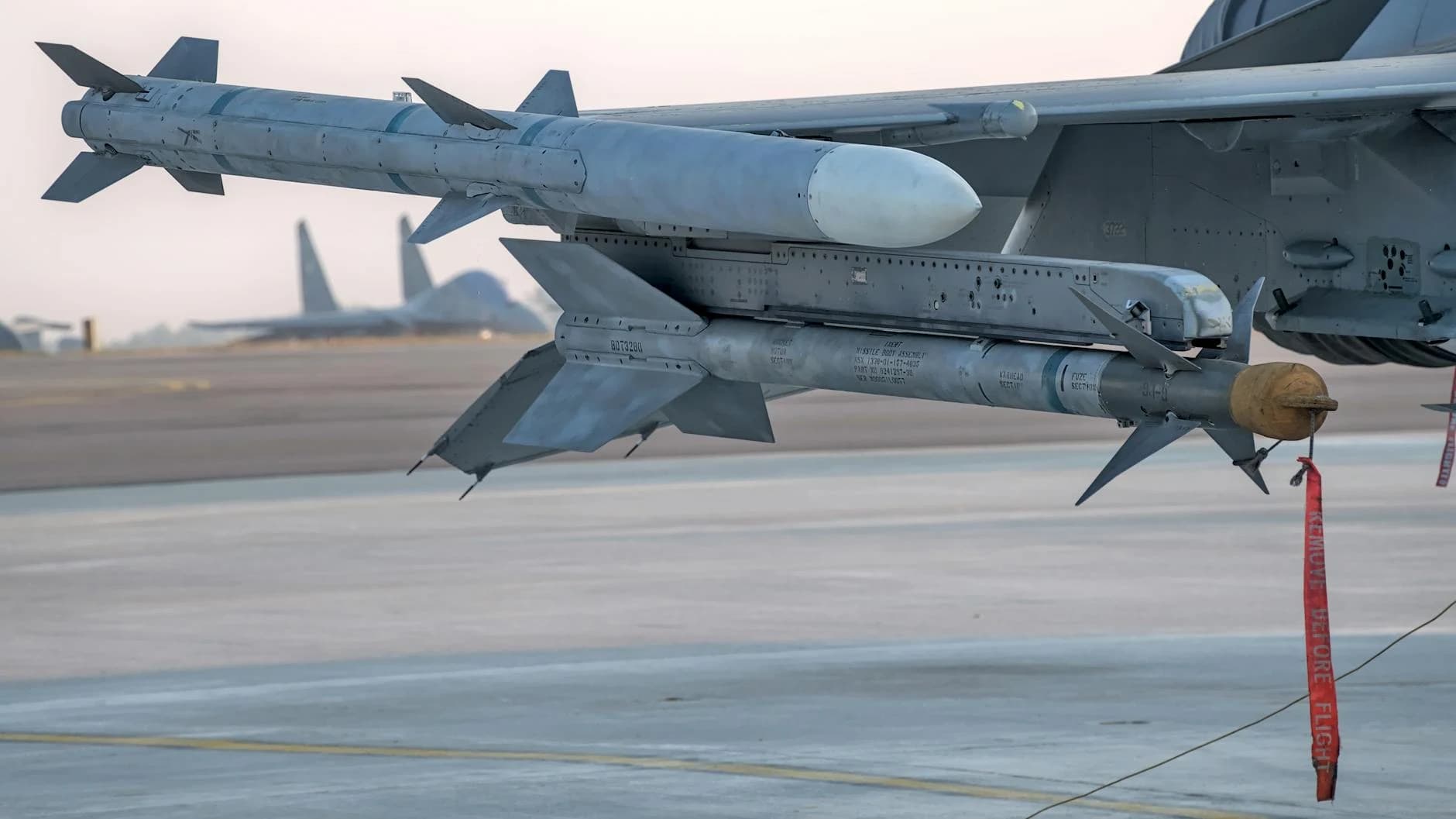
THAAD Interception Rates: Iran Missile Combat Data
Defense & Security · Mar 6, 2026
Latest from The Board

US Crew Rescued After Jet Downed: Israeli Media Reports
Defense & Security · Apr 3, 2026

Hegseth Asks Army Chief to Step Down: Why?
Policy & Intelligence · Apr 2, 2026

Trump Fires Attorney General: What Happens Next?
Policy & Intelligence · Apr 2, 2026

Trump Marriage Comments Draw Macron Criticism
Geopolitics · Apr 2, 2026

Iran's Stance on US-Israeli War: No Negotiations?
Geopolitics · Apr 1, 2026

Trump's Iran War: What's the Exit Strategy?
Geopolitics · Apr 1, 2026

Trump Ukraine Weapons Halt: Iran Strategy?
Geopolitics · Apr 1, 2026

Ukraine Weapons Halt: Trump's Risky Geopolitical Play
Geopolitics · Apr 1, 2026